

A task that is large, complex, and needs different kinds of expertise is easier to manage with several agents, each with a clear role, than with one all-purpose agent.
Key Points to Remember
- Three scenarios: large workload, complex tasks, and the need for multiple areas of expertise.
- Benefits: specialization, easier scaling, and one failure does not bring down everything.
- Design decisions: how they communicate, who talks to whom, and how they collaborate.
- Common patterns: group chat (a host calls on speakers) and hand-off (one finishes and passes the work to the next).
- You need to be able to see the conversations between them, or debugging is impossible.
Going Deeper
Why not use one all-purpose agent. One agent that has to book flights, book hotels, and rent cars at the same time ends up with too many tools, a long prompt, and gets confused. Splitting it up means each agent handles one piece, which makes it easier to change and easier to add new features. It is like a chain store versus a family-run shop: in a chain, each position has its own job.
Think it through when designing. Which agents need to share information (the hotel agent needs to know the flight dates); whether they can all talk to each other or only to the host; and which conversations each agent can see.
Two common ways to collaborate. Group chat: a manager decides who speaks next, and everyone broadcasts messages; this suits discussion and review. Hand-off: the task is split into a pipeline, and each agent finishes a stage and passes it to the next; this suits workflows with a clear order.
Visibility. Always log what each agent says and which tools it calls. Otherwise, when something goes wrong, you can only guess.
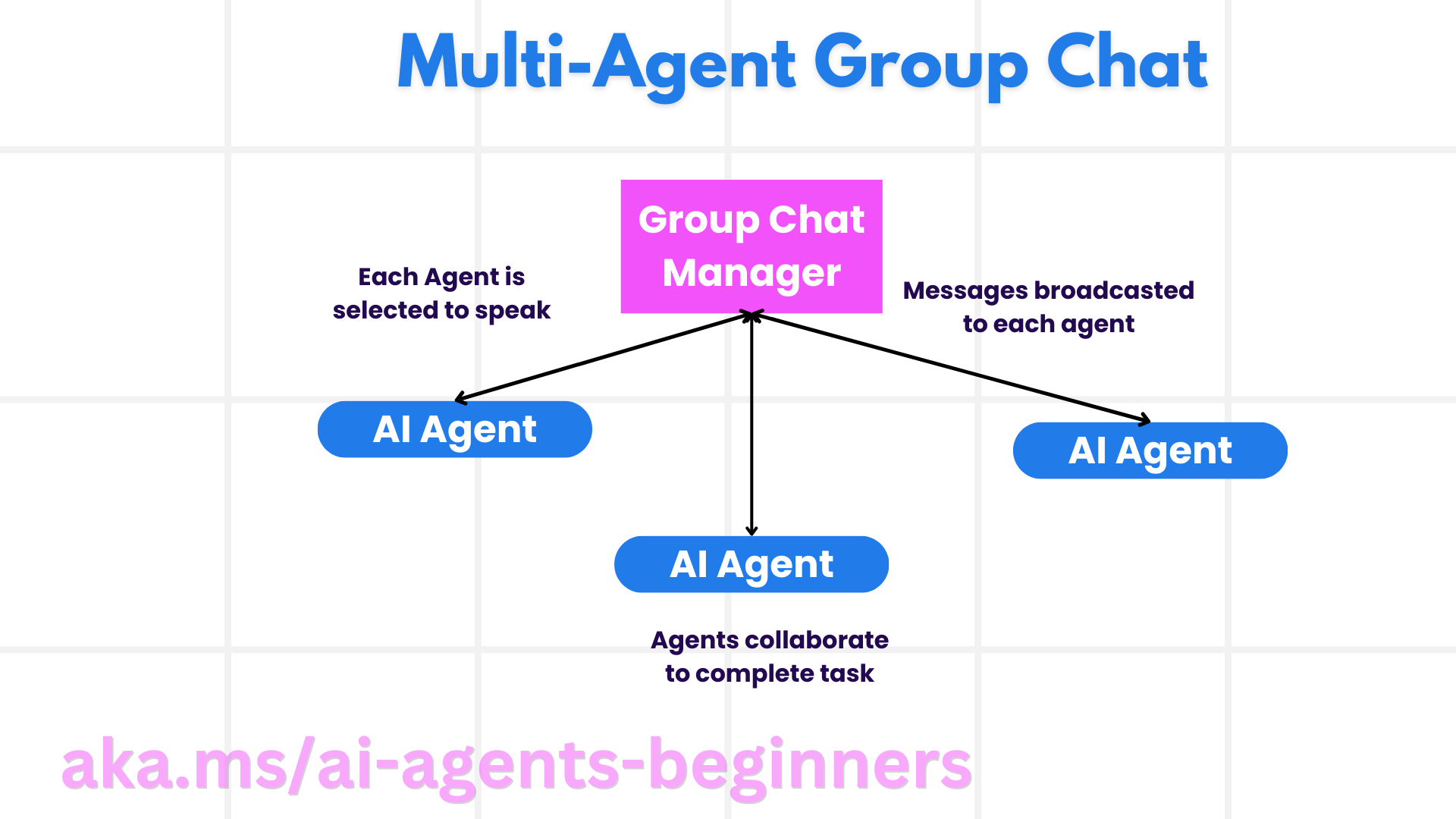
Image from the course repository.
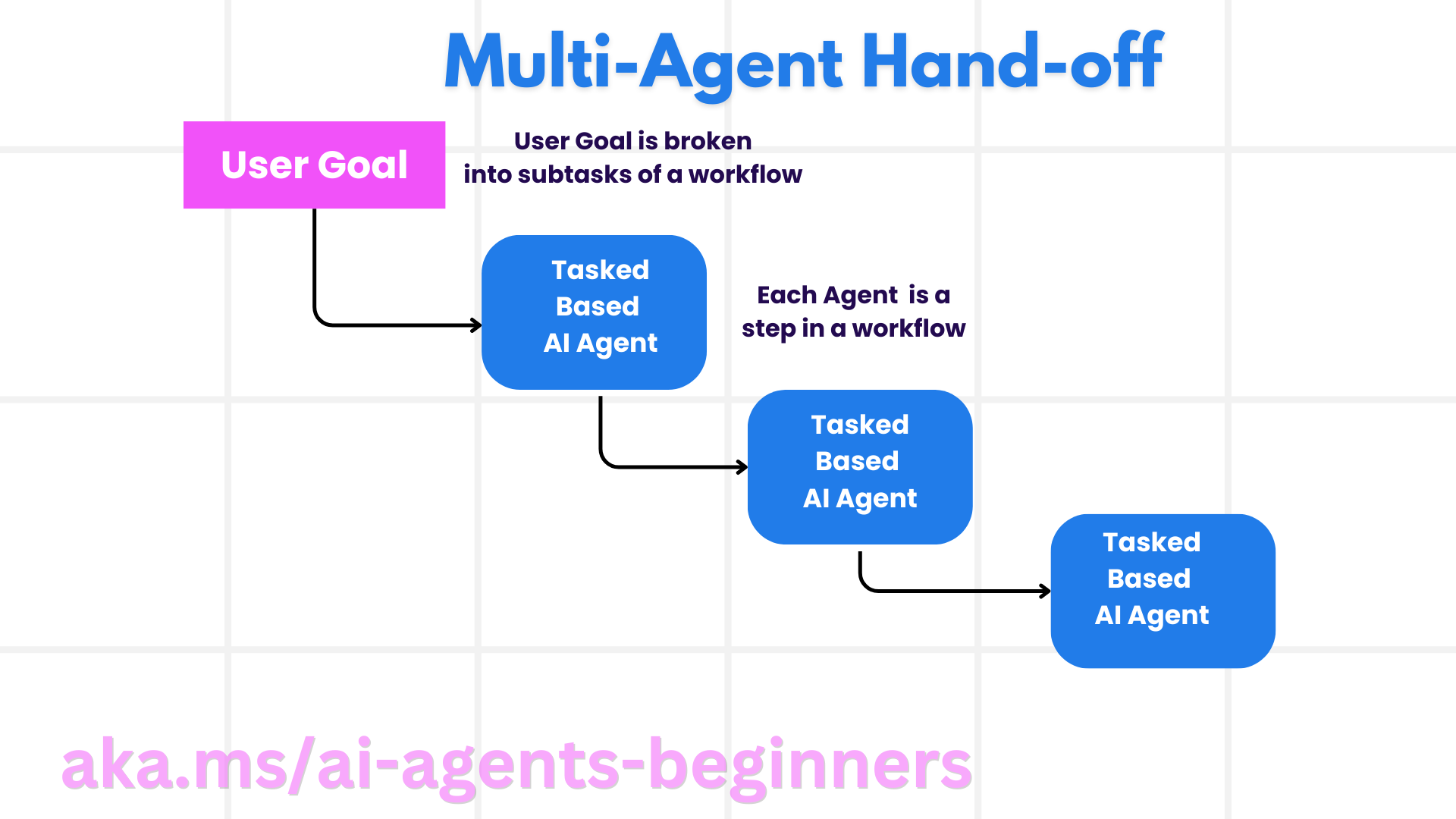
Image from the course repository.
Try It Yourself
Design a small team for a 'blog writing' task: a researcher, a writer, and a reviewer. Write out each one's responsibilities and what gets passed between them.
Let Your Agent Teach You
Give the following to your agent (Claude Code, ChatGPT, and Gemini all work), and it will guide you step by step like a mentor.
Sign in to unlock this key section
New accounts get 10 free credits, plus 1 more for each daily check-in. Spend 1 credit to unlock and it stays open for you.
References
- Content adapted from Lesson 8 (
08-multi-agent) of microsoft/ai-agents-for-beginners, which is under the MIT License. - For the original and full code: 08-multi-agent
- For all courses, see the Agent Course Roadmap
Comments (0)
No comments yet. Start the conversation.