


An agent is a large model that takes action on its own: it can observe its environment, use tools, remember things, and work through a task step by step, rather than just answering you with one sentence.
Remember These Points First
- Agent = large model + actions it can take + tools it can use + memory and knowledge.
- Environment, perception, and action are its three basic parts: where it works, how it sees the current state, and how it changes that state.
- Types range from simple to complex: simple reflex, model-based reflex, goal-based, utility-based, learning, hierarchical, and multi-agent.
- Tasks suited to an agent: open-ended problems where the path cannot be fully written in advance, tasks that take several steps to complete, and scenarios where it should get better with use.
Explaining Further
How it differs from ordinary chat. A plain large model only generates text. Placed inside an agent system, it can actually search a database, call an API, and send messages. The difference is whether it can act.
Booking a flight as an example. The environment is a booking platform; perception means checking flights and prices; actions are booking, changing, and canceling. The large model turns your request, "Next week to Tokyo, not too expensive," into a concrete sequence of steps.
Several types. The simplest is a fixed rule, such as forwarding any complaint email to customer service. Above that is an agent that remembers past prices and alerts you when they rise. Above that is a goal-based agent: given a starting point and a destination, it chains together flights, car rental, and hotel on its own. More complex are agents that weigh cost against convenience and adjust based on feedback afterward, agents that split a large task among subordinates, and multiple agents working together.
When to use one. Three situations justify it: the steps cannot be written out in advance; it needs to use several tools in a row; or you want it to become more accurate over time. Conversely, a single question or a small fixed-process task is more reliable and cheaper with an ordinary script.
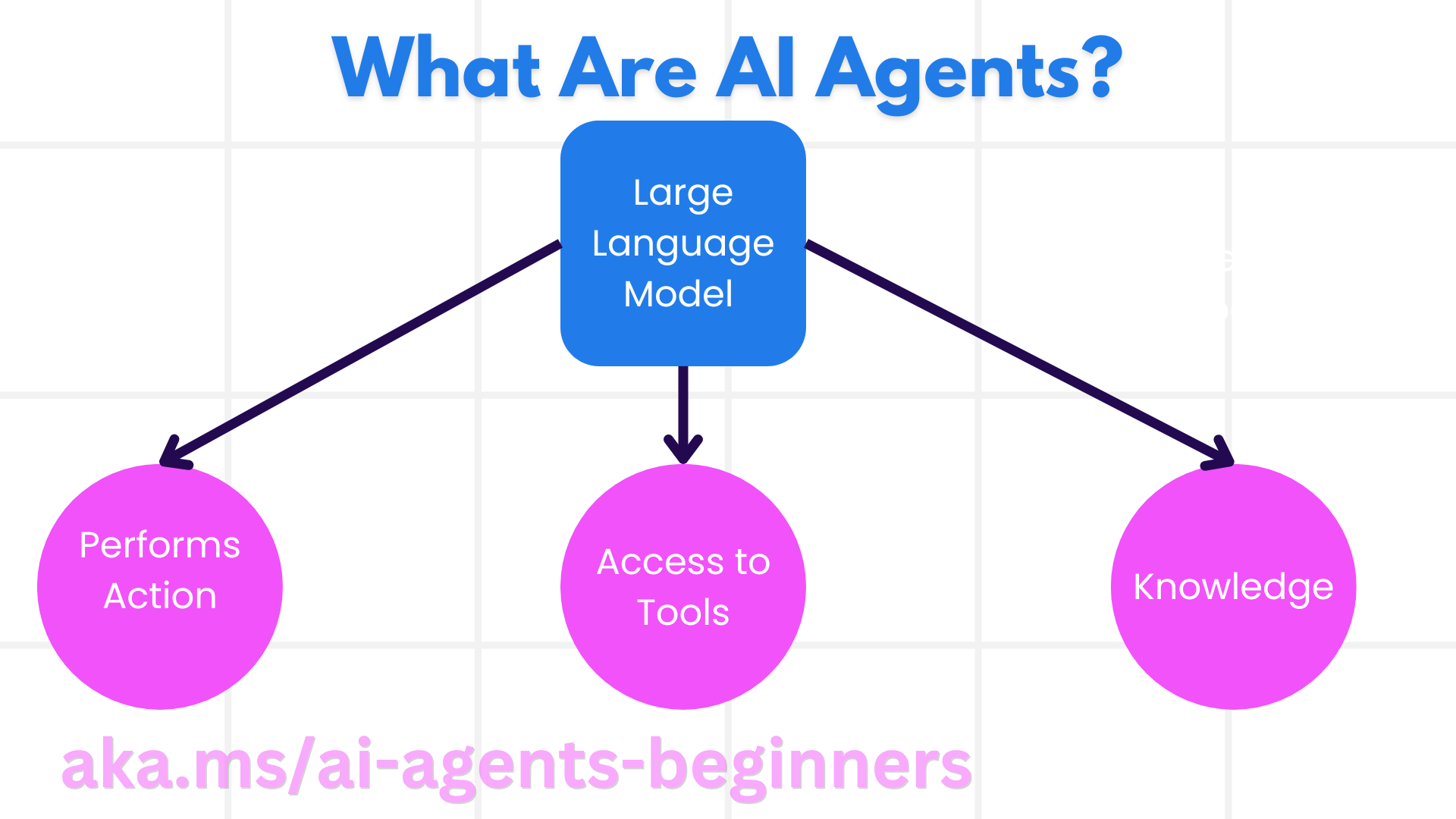
Image from the course repository.
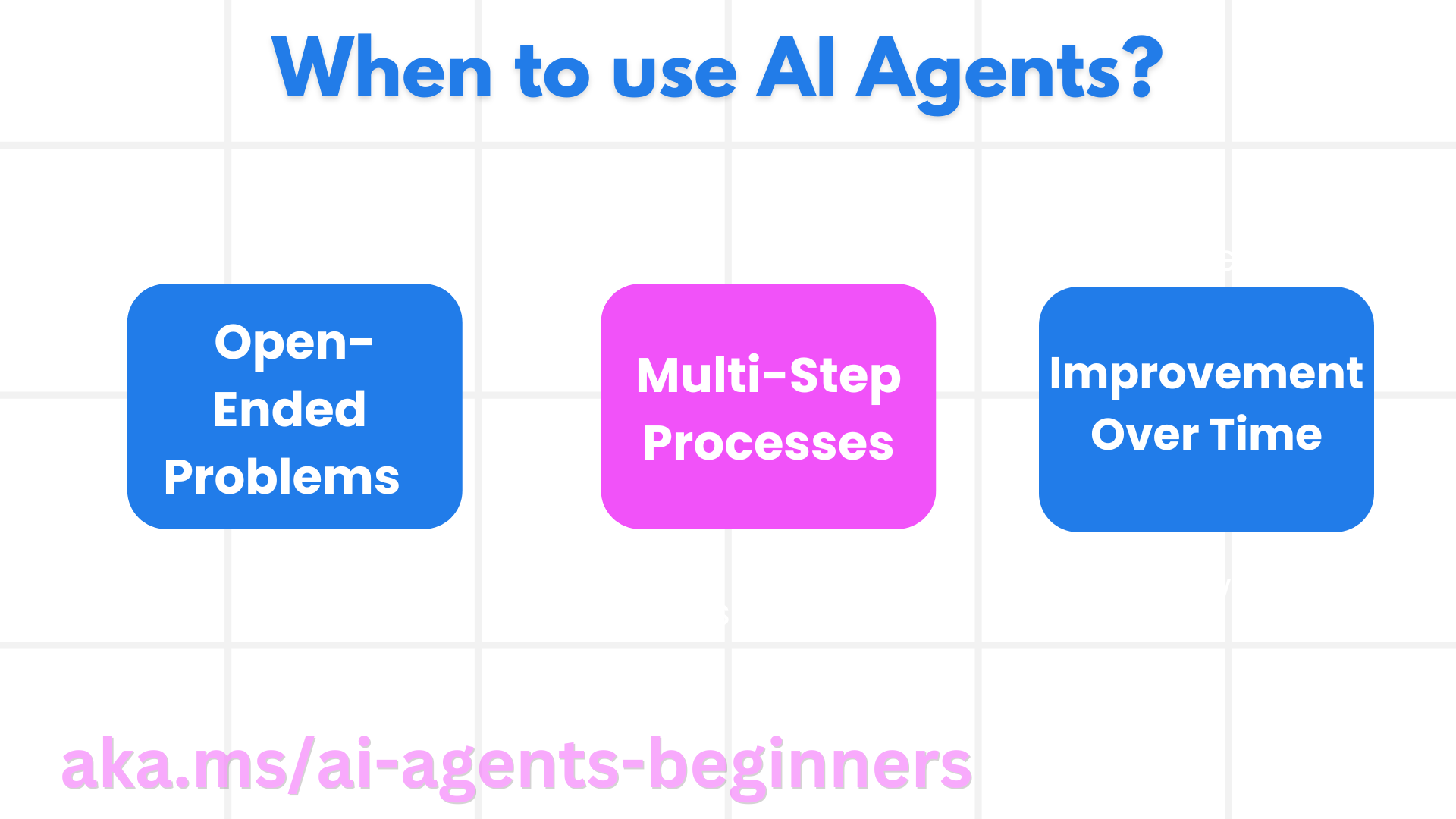
Image from the course repository.
Try It Yourself
Think of three things you have repeated recently: which one suits an agent, and which one a script is enough for? Give your reasons based on the three situations above.
Let an Agent Guide You
Paste the text below into your agent (Claude Code, ChatGPT, or Gemini all work), and it will walk you through step by step like a mentor.
Sign in to unlock this key section
New accounts get 10 free credits, plus 1 more for each daily check-in. Spend 1 credit to unlock and it stays open for you.
References
- Content adapted from Lesson 1 (
01-intro-to-ai-agents) of microsoft/ai-agents-for-beginners, which is licensed under MIT. - For the original and full code: 01-intro-to-ai-agents
- For all courses, see the Agent Course Roadmap
Comments (0)
No comments yet. Start the conversation.