
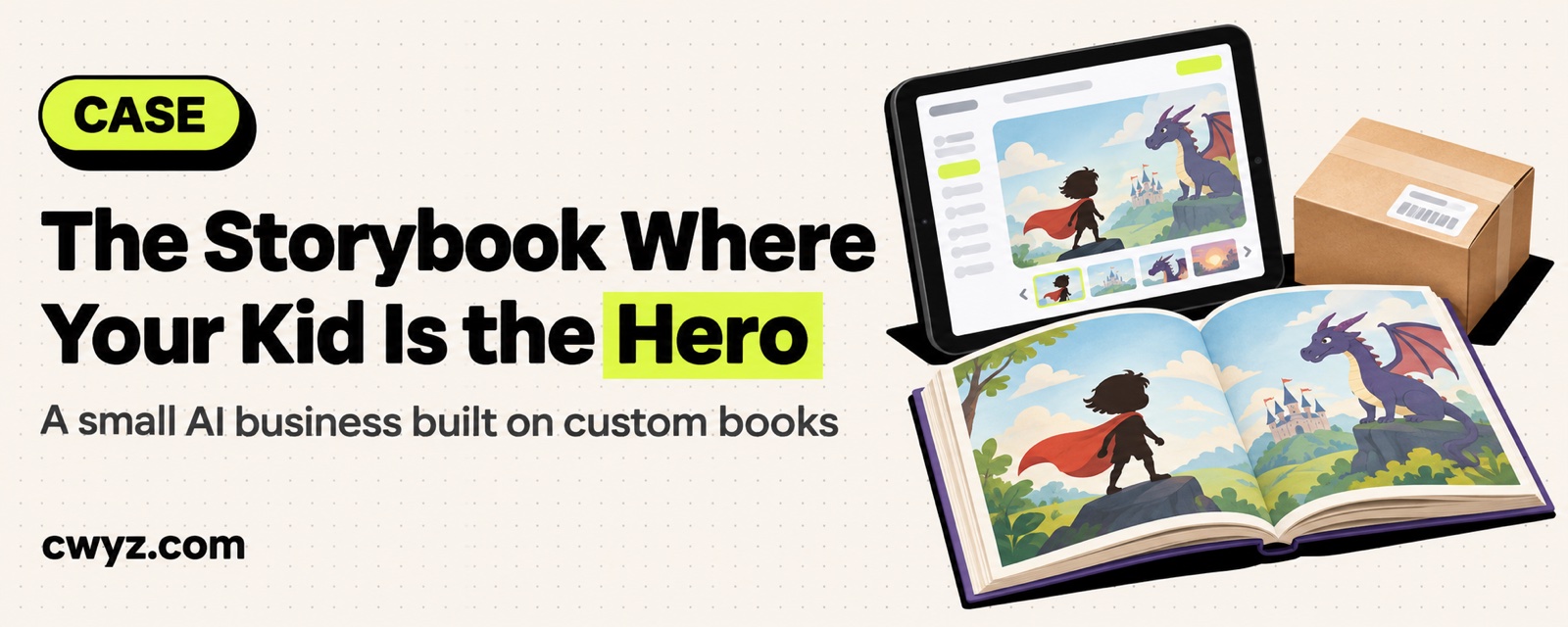
DreamStories does one simple thing. A parent uploads a photo of their child, types in a name and a few interests, and AI generates a storybook starring that child. If the parent likes the preview, they pay, and a printed hardcover book arrives in the mail. According to the founder, Ricardo Vice Santos, in an interview in November 2025, the team has only 7 people. Less than a year after launch, they had sold close to 100,000 books at around $60 each, for roughly $3 million in cumulative revenue. Two things keep this business going: parents will pay for the idea that their own child is the star, and a playbook that counts repeat purchases in the ad budget.
See the business first
| Area | What it involves | According to the interview |
|---|---|---|
| Product | A storybook starring the child, built from their photo and name | Parents preview it first, pay if they like it, and receive a printed book |
| Price | Price per book | Usually around $60, with discounts and multi-book deals |
| Customer acquisition | Paid ads | Mainly Facebook ads, with six-figure monthly spend in dollars |
| Acquisition math | How much you can spend to win one new customer | Roughly the value of that customer's first order |
| Profit | Where the money comes from | Repeat purchases: a different child as the hero, or a book for siblings and cousins |
| Team | Size | 7 full-time staff, mostly engineers |
All figures come from the founder's interview on the Latka podcast. The cumulative revenue is the host's estimate, calculated by multiplying the price by the number of sales, and the founder confirmed it was "roughly right." We have not verified these numbers. dreamstories.ai now redirects to dreamstories.com, which shows a different product on its homepage (a five-minute bedtime story read aloud each night). We could not confirm the current status of the custom storybook business from the website.
Why it works: three reasons
- The hero is their own child: Ordinary picture books lose a child's interest after two reads. When the main character has your child's face and name, the child keeps asking for it, and parents are more willing to spend.
- It is a natural gift: Birthdays, holidays, and grandparents who want to show their love all give people a ready reason to buy. One family can order several copies.
- Repeat purchases are counted in the ad budget: Most competitors stop raising their bids once their ads reach break-even. This business is willing to bid based on the value of the first order, because repeat purchases are where the profit comes from. That lets it win more traffic in ad auctions.
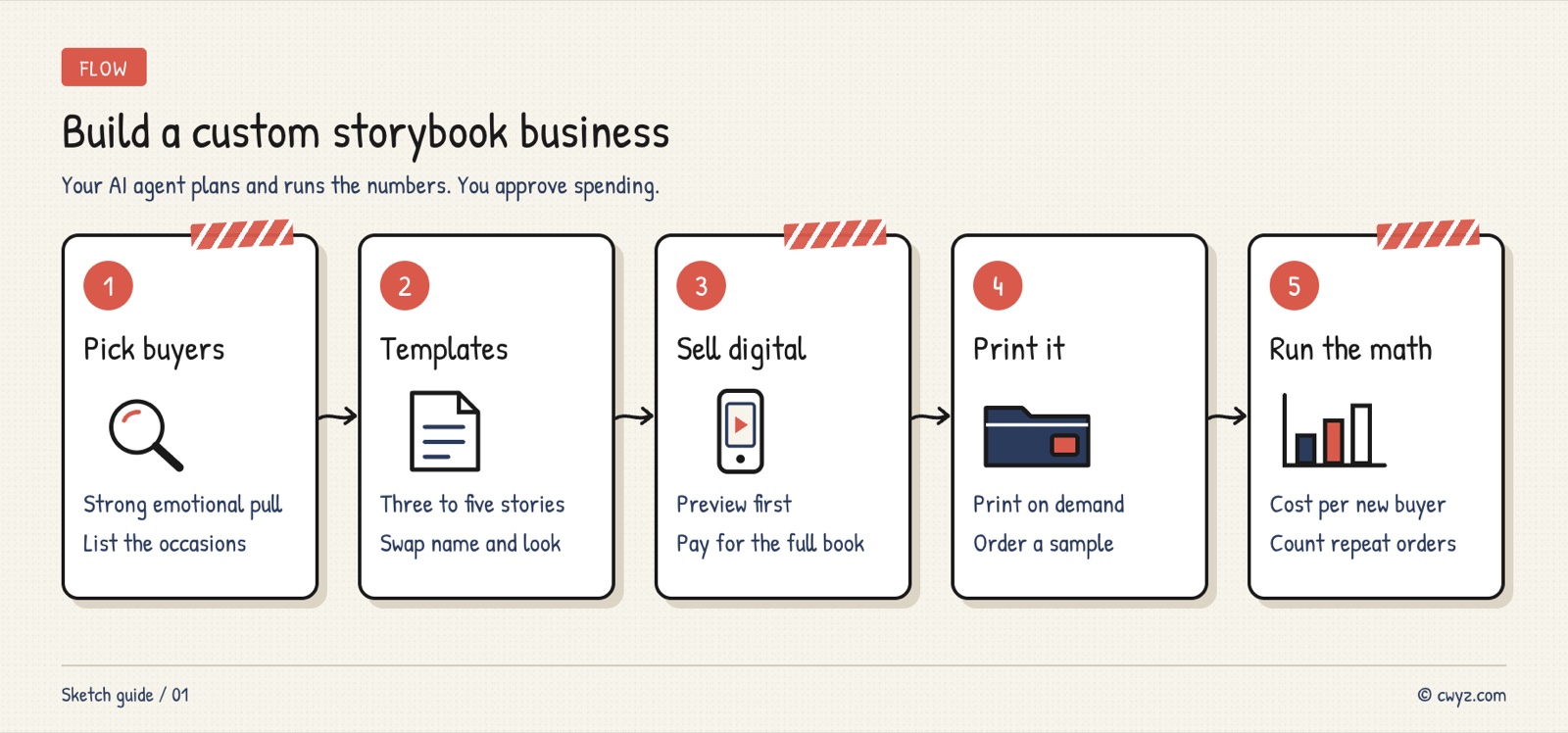
Build it: a five-step SOP
Hand this to your AI agent, and have it check each step against the done criteria as it finishes. The example below is a custom storybook for a child. Swap in a couple's keepsake album or a pet picture book, and the same process applies.
Sign in to unlock this key section
New accounts get 10 free credits, plus 1 more each day you sign in (none on days you don't). Spend 1 credit to unlock and it stays open for you.
Safety basics
- Treat children's photos as sensitive data: Be clear about where photos are stored, who can see them, and when they are deleted. Do not use them to train models or for promotion unless the parent clearly agrees.
- Handle payments and ads yourself: Your AI agent can help you run the numbers and draft plans, but you must confirm every payment, top-up, and ad purchase yourself.
- Show the preview before charging: Let parents see their child in the book before they pay. This reduces refunds and disputes.
Common pitfalls
- The character doesn't look like the child: Parents will ask for refunds if the AI-drawn child doesn't match the photo. Test with several different photos, and launch only once the likeness is right.
- Printing costs were left out: Printing plus shipping can eat most of your profit. Print a sample and do the math before you set the price.
- Judging the business by the first order alone: This business makes money from repeat purchases. If you judge it only by the first order, you may quit too early, or you may keep raising ad spend while repeat purchases never take off.
- Using someone else's characters: Disney characters, celebrity likenesses, and other copyrighted or portrait-protected images cannot appear in your products.
- Ad creative that violates privacy: If you use a real customer's child in an ad image, get the parent's written consent first.
If you just want to make bedtime stories for your own child and don't plan to sell them, check out Turn One Line into a Stop-Motion Short with Your AI Agent.
Comments (0)
No comments yet. Start the conversation.